
News
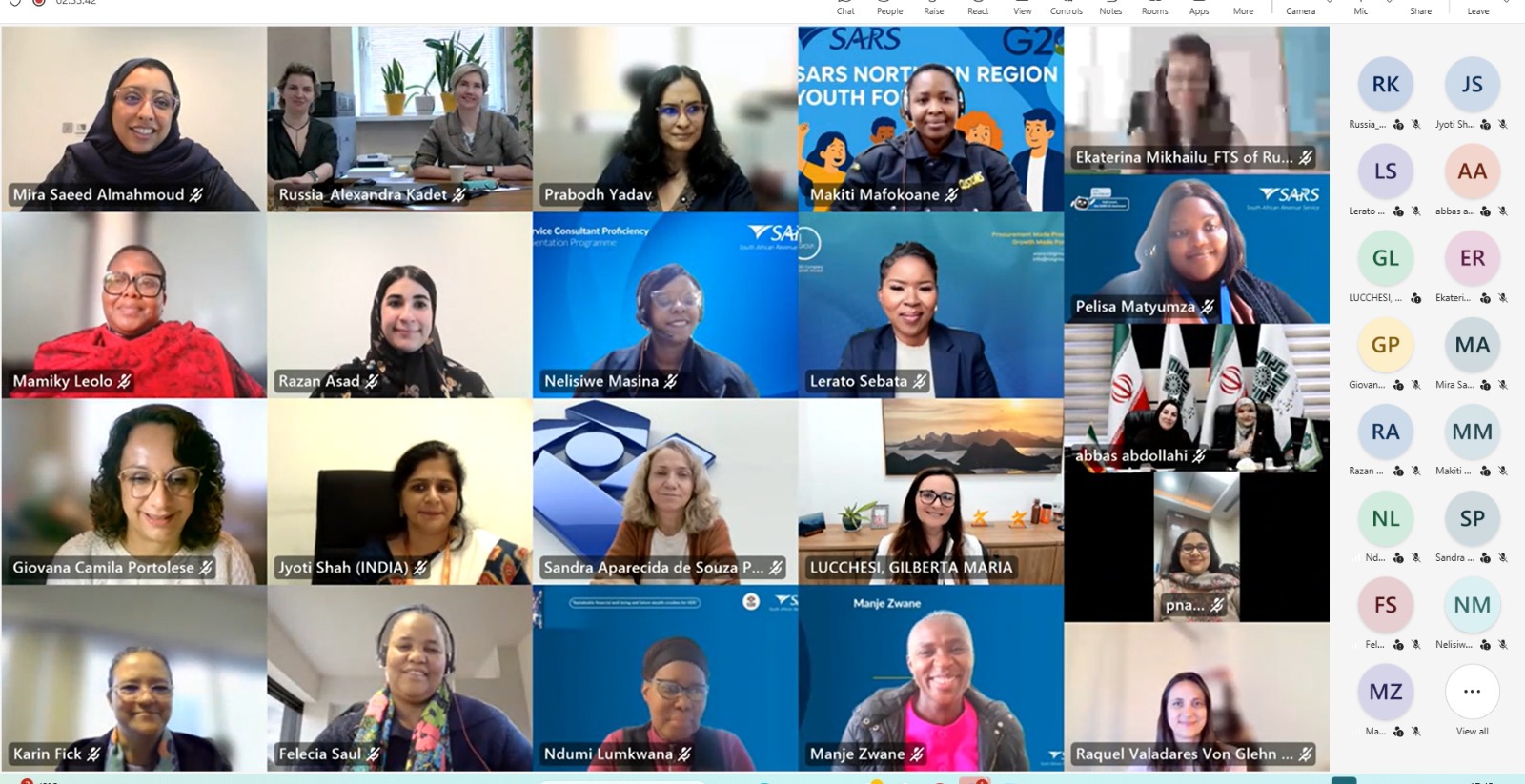
On 10 June, the BRICS Women in Tax Network held an online event on female entrepreneurship and interaction between business and tax administrations.
The meeting was organised as a roundtable bringing together representatives of BRICS countries, tax administrations and invited women entrepreneurs. The main purpose of the event was to consider tax administration from a business perspective: which services already support entrepreneurs, which difficulties remain in interaction with tax authorities, and what changes could make this interaction more convenient.
The discussion featured entrepreneurs and experts from Brazil, Iran, Russia and South Africa. Brazil was represented by Gilberta Lucchesi, Vice CFO at Repsol Sinopec, who assisted the Receita Federal do Brasil in designing Confia, a cooperative compliance programme. Iran was represented by Seyedeh Khamsa Asbaghian, Member of the Board of Directors of the Irandokht Eastern Cultural and Economic Institute and Professor at Tarbiat Modares University in Tehran. Russia was represented by Natalia Kozlova, Partner and Head of Transfer Pricing at TeDo. South Africa was represented by Lerato Sebata, CEO of ROI (Pty) Ltd, a company working in procurement, enterprise development and digital solutions for SMEs.
The discussion was structured around three practical questions. Participants shared their views on the most useful features and services provided by national tax systems, identified key barriers in interaction with tax authorities, and proposed possible directions for making such interaction smoother in the future.
The roundtable format made it possible to compare the experience of women entrepreneurs from different BRICS countries and identify issues relevant to the development of taxpayer-oriented tax administration. These included the accessibility of digital services, clarity of tax procedures, quality of communication with tax authorities and consideration of business needs in the development of tax tools.
The event formed part of BRICS work to develop professional dialogue between tax administrations and the business community, as well as to support the exchange of practical experience in tax administration.